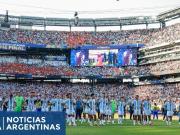
According to AS, the FIFA president is facing unprecedented scrutiny due to his close ties with Trump and his proposal to partially sell World Cup broadcasting rights.
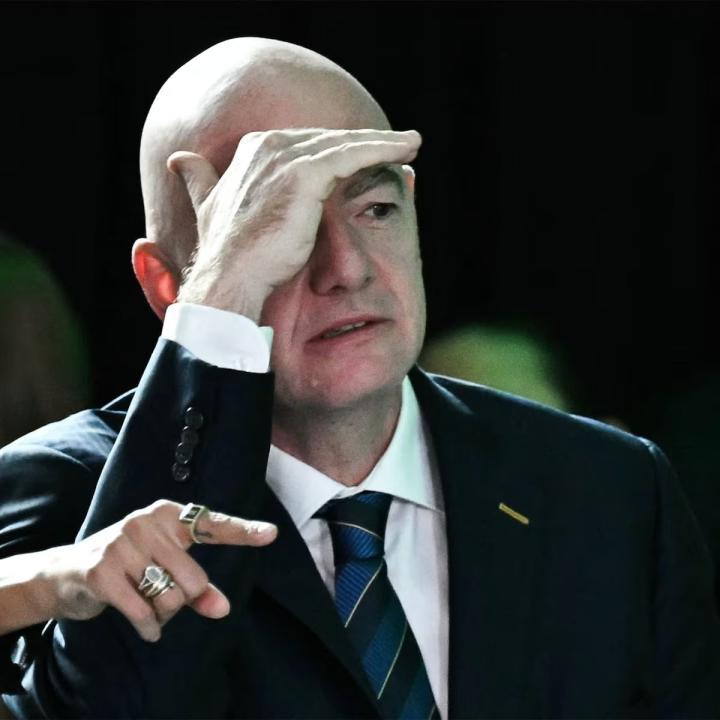
In recent months, the international football community has been increasingly critical of FIFA, or more precisely, its president. His disconnect from reality and excessive focus on Donald Trump at this global football extravaganza continues to provoke resentment towards the president of the world's highest governing body.
This resistance began during the World Cup, even appearing as early as the draw. At that time, FIFA averted a major diplomatic crisis at the last minute in response to the actions of the US president, who left representatives of Canada and Mexico feeling snubbed. Even before the World Cup kicked off in Mexico City on June 11, FIFA officials were certain that one or more controversies would occur during the tournament. However, they did not anticipate that the football system itself would be threatened by Donald Trump and by deliberate leaks from within FIFA aimed at challenging the existing structure.
Donald Trump's frequent appearances on the football field, from last year's Club World Cup to this World Cup, have gradually led the public to believe that he holds sway in the football world. This is not the case, but Infantino seems quite comfortable with it; from a public perspective, Trump's image is unpopular, and this is also true within the football community. Only after the leaked phone call from within FIFA, in which Trump requested that Balogun not be expelled, did the outside world realize that the previous rumors were not an exaggeration. This was the first major blow to Infantino.
This was no insignificant move. Very few people within FIFA knew about that phone call. Yet, almost simultaneously, British media received alerts about the US president's actions. Only hours passed between the initial shock and UEFA's statement. If anyone explicitly opposed Infantino's actions, it was Alexander Ceferin. He spearheaded the first wave of reactions against the current FIFA president. Neither inside nor outside FIFA understood what had happened, nor why the disciplinary committee chairman, without consulting others, decided to spare the striker from expulsion.
Before the red card incident, Trump had wanted to change the tournament schedule to prevent Iran from setting foot on US soil, but Infantino managed to persuade him to abandon this idea that could jeopardize the tournament's progress. Two weeks later, The Times revealed the contents of an agreement that originally required approval from member associations: a partial sale of the World Cup's commercial rights. This prompted some of Infantino's associates to publicly voice their demands for a change in the existing system, hoping the president would return to his previous approach and stop being so fixated on the present.
The global statements issued by the continental football federations have limited impact, a fact well understood by everyone involved in the football world. Each association has its own calculations when voting, but what truly hurts Infantino is the response from those who were indispensable to him during his tenure. He feels particularly uneasy and wants to know, personally, face-to-face, what everyone is really thinking. He knows he has six months left to secure another term, and that's becoming increasingly difficult.
Currently, his upcoming projects are already under scrutiny. The Club World Cup, the expansion of the 2030 World Cup to 64 teams… these are not Infantino's biggest concerns right now; what's truly more important is securing his future. Many potential replacements have been suggested, including some of his close associates, but if anyone holds the key to the future direction of football, it's undoubtedly Aleksander Ceferin. The UEFA president has consistently maintained a tough stance and clear position on many FIFA-initiated projects. Just when it seemed relations had returned to normal, they have spiraled out of control again, and Ceferin has become the battering ram that broke down the wall surrounding Infantino and made him feel safe.
The tension even forced FIFA Secretary General Matthias Grafström to write a letter urging things to get back on track and emphasizing that football would not forget the principles that had ensured its stability in recent years. The 2030 World Cup is not in danger as many have mistakenly believed. Spain has never considered giving up, nor will it back down because of UEFA's boycott of FIFA projects. What is truly unsettling now is FIFA's frequent overtures to Morocco. Spain and many other associations consider this completely abnormal.