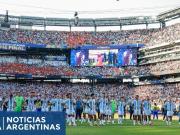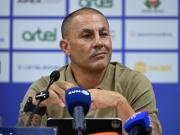
On August 5th, Uzbekistan national team head coach Fabio Cannavaro gave his first media interview since the end of the 2026 World Cup. The Italian coach addressed criticisms of the team's performance, refuted numerous inaccurate reports, and outlined plans for preparations for the upcoming Asian Cup.
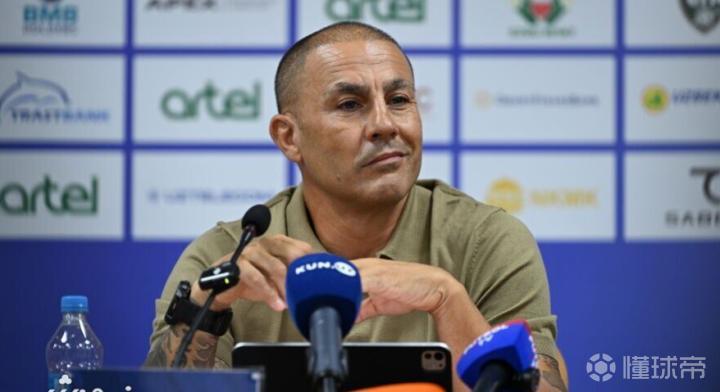
No one deserted at the last minute.
Before answering reporters' questions, Cannavaro gave a lengthy opening statement. He first addressed previous reports that he had abandoned the national team and returned to Italy for vacation immediately after the World Cup.
"We've seen a lot of talk about how I abandoned the team and flew back to Italy for vacation after the World Cup. But we had already arranged with the Football Association to say a proper goodbye to everyone in New York. I didn't run away at the last minute. I stayed until the very last moment, until the last staff member and player left the hotel. I had nothing to run away from; I'm proud of my team and these players," Cannavaro began.
Cannavaro explained that he returned home because the Uzbek domestic league was on hiatus. Once the league resumed, he immediately returned to Uzbekistan to watch the matches again.
He expressed his overall satisfaction with the logistical arrangements for the national team at this World Cup: the players' travel to and from the United States and Canada for the competition proceeded smoothly without any issues regarding travel, accommodation, or flights. He thanked the Uzbekistan Football Federation and the entire coaching staff for this achievement.
The head coach recalled that long before the World Cup started, he had warned everyone that the intensity of the matches would be very high.
“Eight months ago, when we first started discussing preparations for the World Cup, I proposed to improve the players’ strength, raise the level of the domestic league, and improve the entire youth training system. My first consideration was the intensity of the matches. I knew that the competition in the World Cup would be brutal and difficult. This is my first time leading a team in the World Cup as a head coach, but don’t forget that I played in four World Cups as a player and even won the championship as captain. (…) Perhaps some people laughed at me at the time, saying, ‘We’ve made it to the World Cup, so we have nothing to fear,’ but I knew very well that this tournament would be an extremely rigorous test.”
Cannavaro stated that numerous false rumors have emerged surrounding the national team, covering aspects such as the roster, medical team, diet, salaries, and team rules and regulations.
"I don't know, maybe there's a snitch in the team. I don't know what this person's purpose is in spreading these rumors, but I know they have bad intentions. As the head coach, I have to protect my players. You can criticize me, that's perfectly fine, but don't attack the players; they've given their all," he stated.
Cannavaro emphasized that he is willing to take responsibility for the results of the game and accept criticism directed at him personally, but he will do his best to protect his players.
On Masharipov: "Perhaps I'm the only coach foolish enough to want to take him to the World Cup."
The Italian coach specifically addressed the selection process for the final roster and responded to the public outcry over the omission of players like Turgunboyev from the squad.
"After we announced the roster, many people expressed their regret over the players who were not selected, such as Aziz and Elkinov. I have no personal prejudice against them. I just told them that based on their performance and form in the Super League at the time, they did not meet the national team's call-up standards. Yes, they made great contributions in the World Cup qualifiers and scored crucial goals, but that alone is not enough to secure a ticket to the World Cup finals."
In his opening remarks, Cannavaro focused on Masharipov. The head coach revealed that the midfielder had not participated in any official matches or friendlies for nearly eight months, and that Cannavaro had never even seen him play during his tenure as coach.
Even so, the coaching staff, considering his individual abilities and contributions in the World Cup qualifiers, did their best to help him qualify for the World Cup. Cannavaro made special trips to Dubai and Rome to meet with him and arranged for professionals to help him with his rehabilitation.
"Perhaps I'm the only head coach who's foolish enough to call up Masharipov. Why? Because I've never seen him play since I took over the Uzbekistan national team. But I recognize his ability and will do everything I can to help him get onto the World Cup stage."
Cannavaro stated that the core issue preventing him from participating was not his knee injury, but rather his back pain. The head coach explained that Masharipov suffers from a herniated disc, which at its worst makes walking extremely difficult.
"In the end, we found the problem wasn't in his knees, but in his back. During the training camp in Tashkent, a medical examination showed a significant difference in muscle tone between his two legs, so we arranged for him to undergo further examination. The back injury made it impossible for him to handle the training load. Making this decision was very difficult. He's an excellent player who put in tremendous effort in the World Cup qualifiers and should have been on the World Cup stage. But someone always has to make a choice," Cannavaro explained.
Cannavaro added that he himself had missed the European Championship due to injury during his playing career and fully understood Masharipov's situation. He also expressed his bewilderment: while other players in the team were injured, the media was focusing solely on Masharipov's condition.
Cannavaro admitted that changing the goalkeeper might have been his mistake.
When discussing his own mistakes, Cannavaro stated that the coach's decisions were a mix of right and wrong. He believed that starting 18-year-old Behruz Karimov in the first World Cup match was the right choice; however, changing the starting goalkeeper might have been a mistake.
This refers to the goalkeeper rotation between Yusupov and Nematov. Cannavaro explained that when he first took over, Yusupov was still recovering from injury and had missed many matches. Nematov, on the other hand, had shown impressive form in friendly matches against Egypt and Iran, as well as in training.
"Replacing the original starting goalkeeper might have been a mistake. But Nematov performed much better in training. As the head coach, I had to make a decision."
Cannavaro also expressed regret that some veterans who had fought for the country for many years did not even get 5-10 minutes of playing time in the World Cup.
"I do make mistakes, and I will learn from them. But all my mistakes stem from the desire to help the players."
One of the biggest lessons he learned from this tournament was that the final roster cannot be determined solely by a player's past achievements.
Some players secured their World Cup spots thanks to their performance in the World Cup qualifiers. Going forward, squad selection should prioritize current form and immediate impact, rather than past glories.
Regarding salary, foreign team members, and team meals.
Cannavaro refuted rumors that he earned an annual salary of 4 million, but did not disclose the specific amount of his contract.
According to the agreement with the Uzbek Football Association, he personally covered part of the salaries of the foreign coaching staff. Rolando Bianchi joined the coaching staff free of charge; some Italian physiotherapists accepted jobs at a much lower rate than those offered by their clubs.
"To strengthen our medical team, we brought in two Italian physiotherapists. Alnaldo Esposito previously worked at Juventus; Simeone came here specifically after terminating his contract with a team under the City Football Group, taking a pay cut to 20% of his original European salary."
He also refuted rumors that the national team only ate Italian food: the menu was customized by a sports nutritionist, and players could also enjoy local Uzbek cuisine after the game.
"I won't force players to eat anything at gunpoint; they have the freedom to eat whatever they want after the game."