
According to Spanish media outlet Cadena SER, after The Times revealed that FIFA President Gianni Infantino allegedly exchanged the right to host the 2030 World Cup final for Morocco's support for his re-election, Spanish Sports Minister Milagros Tolón responded to related questions in an interview with the program Hora 25.
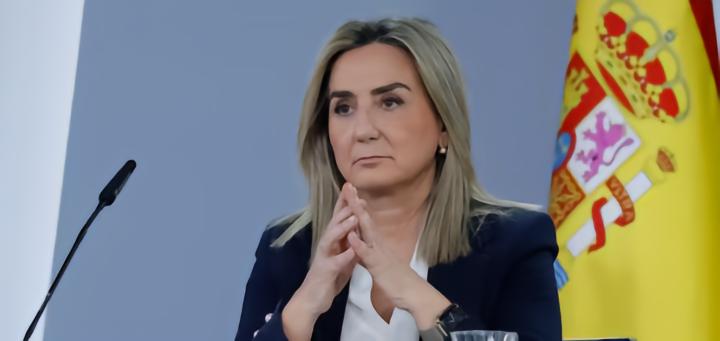
The Times reported that FIFA President Gianni Infantino proposed to Morocco that the 2030 World Cup final be held in Morocco in exchange for their support in the FIFA presidential re-election election.
Following the news, both the Spanish Football Federation (RFEF) and Morocco immediately denied it. Subsequently, the Spanish government also gave its first public response, with Sports Minister Toron giving an interview and discussing the information the government possessed.
Reporter: Was the Spanish government aware that Infantino had taken such actions?
Toron: We were also quite surprised by this this afternoon. Most importantly, FIFA has officially denied this news. We are currently in communication with FIFA and will hold our next meeting in September. FIFA has given a very clear and firm denial. We will continue to move forward with our work because our goal remains unchanged – the 2030 World Cup final should be held in Spain.
Reporter: Do you believe FIFA's denial? After all, under the circumstances today, it seems they have no choice but to deny it.
Toron: We will continue to work according to the established plan. Spain has many advantages, not only in sports. We just won the World Cup, with success not only in men's football but also in women's football. Furthermore, Spain and Portugal jointly initiated the bid for the 2030 World Cup, with Morocco joining later. Therefore, I believe the World Cup final will ultimately be held in Spain.
Reporter: How likely do you think the World Cup final will be held in Spain?
Toron: The final decision rests with FIFA. However, logically speaking, holding the final in Spain has many advantages. We have extensive experience hosting major international sporting events, modern transportation infrastructure, and Spain is a safe and stable country. Considering all these factors, I believe FIFA will ultimately choose Spain as the host country for the World Cup final.
Reporter: Looking back, especially after the recent Ceuta incident, does the government regret co-hosting the 2030 World Cup with Morocco?
Toron: I'm not in a position to comment on this, as the selection of the World Cup host country is a decision made by FIFA. Joint hosting has many positive aspects, and we've already seen relevant experience in this World Cup. FIFA considers it a reasonable approach and will continue to pursue it. Our focus is on striving to host the most successful World Cup in our country's history.
Reporter: The Sumar party, a partner in the ruling coalition, is currently calling for China to withdraw from co-hosting the World Cup with Morocco, citing numerous human rights shortcomings in Morocco. What is your view on this?
Toron: We respect differing opinions. It's normal for there to be disagreements between parties in a coalition government. However, the government's overall position is very clear: we support hosting the 2030 World Cup and believe it will be an important opportunity to showcase Spain's national image. We will continue to work on this while respecting different voices.
Reporter: Many people have asked you this before, but you haven't given a clear answer. I won't ask you today whether you support Madrid or Barcelona hosting the final, but will the government state its position on this?
Toron: As the Spanish government, our only clear position is that we hope the 2030 World Cup final can be held in Spain. The final decision rests with FIFA, but we believe that Spain deserves to host the final, and we have always strived for this.