Recently, Gianni Infantino announced a major development: FIFA plans to establish a new company, FIFA Forward Enterprise (FFE), to incorporate the commercial rights of core FIFA events such as the World Cup, Club World Cup, and Women's World Cup, and to bring in external investors. According to FIFA, the company's initial valuation is $20 billion, and it plans to raise $4.2 billion.
However, this proposal only lasted four days. On July 31, Infantino issued a statement announcing that FFE would no longer be pursued.
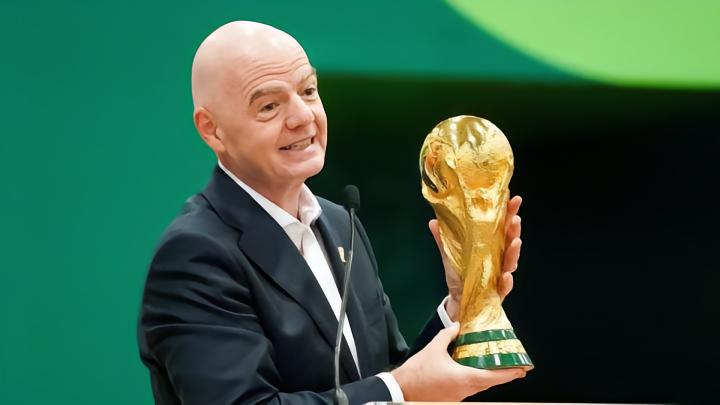
So, what exactly is FIFA trying to sell?
From a technical standpoint, Infantino certainly wasn't bold enough to sell the World Cup trophy, nor did he directly sell FIFA as an organization. FIFA repeatedly emphasized in its statement that it would retain permanent control of the FFE, and that external investors would only hold minority, non-controlling interests and would not participate in football governance, schedules, competition rules, or sporting decisions. He even specifically clarified, "Nobody is selling footballs."
What FFE is really selling is the most valuable part of the World Cup and other core FIFA events: broadcasting, sponsorship, ticketing, licensing, hospitality, commercial development, and event operation delivery. In other words, FIFA isn't selling the World Cup itself, but rather taking a portion of its future cash flow and packaging it all into a company that can be valued, raised, and attract investors, turning the World Cup's future growth into a financial asset.
This model is not new. F1 has previously packaged and sold its commercial rights for many years to private equity funds, turning the expected growth of the race into a financial product, allowing capital to enter early and share in the profits.
But the World Cup is not Formula 1, and that's the core of the controversy. The World Cup is special because it's understood as a top-level event belonging to the global football community. Players come from clubs across continents and countries, fans come from all over the world, national teams represent public sentiment, the host country incurs huge organizational costs, and the return is perhaps the biggest influx of viewership in the global sports world. FIFA's legal status is that of a non-profit association, and nominally all its revenue should serve football within this framework.
FFE takes this relationship a step further: future business growth is corporatized, securitized, and capitalized. Investors are not interested in any single match, but in the expectation that prices will continue to rise, expansion will continue, and new revenue will continue to be developed in many future World Cups.
Infantino knew this was a sensitive issue, so he gave it a very attractive label: the democratization of football. FIFA promised that each member association could increase its development funding from $8 million to $20 million in the 2027-2030 cycle; in addition, it could receive a one-time grant of up to $20 million for long-term projects such as stadiums and training centers.
Infantino's most stable political base over the past decade has been built on this distribution logic—since the "Forward Program" was launched in 2016, FIFA has invested nearly $2.8 billion in its member associations. In the upcoming 2023-2026 cycle, each member association can receive up to $8 million in development funds. In the 2019-2022 cycle, this figure was $6 million. This is very attractive to many smaller national football associations; FIFA's money could be a crucial source for them to build training facilities, establish youth training systems, and maintain the operation of their national teams.
The story was still told well, but this time Infantino failed to sway anyone. The opposition to the FFE announcement came swiftly and decisively. UEFA almost immediately launched an attack, directly targeting the very foundation of football governance: "The World Cup is not FIFA's asset," and "The soul of football cannot be traded for financial gain." Subsequently, UEFA's 55 member associations reached a consensus: if FIFA continued to push forward with this plan, Europe would boycott FIFA events.
Even more critically, the opposition didn't stop in Europe. CONCACAF (Confederation of North, Central American and Caribbean Association Football) made its position clear after its members' meeting—all 41 of its member associations unanimously rejected the proposal. Their reasons were straightforward: procedural irregularities, an overly rushed timeline, and a lack of oversight of key governance aspects; moreover, having just profited handsomely from the 2026 World Cup, why should FIFA need to seek private equity investment? AFC (Asian Football Confederation) subsequently issued a statement, its wording less direct than CONCACAF's, but its core message was the same: the future of world football cannot be discussed without considering the existing governance framework. CONMEBOL (South American Football Confederation) left room for maneuver, demanding further explanation from FIFA regarding the scope, structure, governance, and potential impact of FFE (Free Football Federation), without explicitly expressing support.
Even within FIFA itself, the situation began to crumble. Senior advisor Carlos Cordeiro publicly resigned, stating that he could not support the sale of World Cup shares and bluntly called it an "anti-football" deal. Chief Operating Officer Kevin Lamour told the Associated Press that FFE was "a one-man project," and FIFA staff were kept in the dark by Gianni Infantino throughout the process.
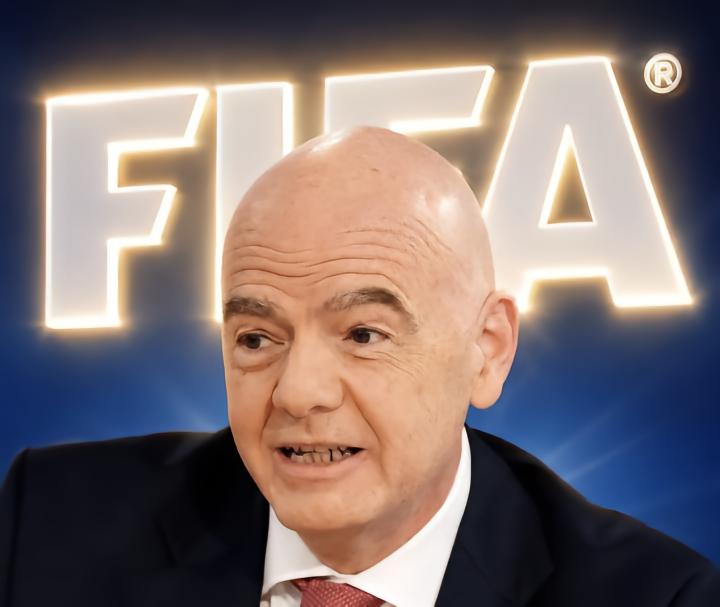
FIFA Secretary General De Grafström, a former subordinate of Gianni Infantino brought from UEFA, described the FFE turmoil in an internal email as "a series of regrettable and reprehensible events," admitting he was completely unaware of it beforehand. He further wrote meaningfully, "Individuals, turbulent situations, and unfortunate events always come and go"—implying that Infantino may not remain president forever. While Infantino has held absolute power within FIFA for years and has faced constant external criticism, such a concentrated and public defection of his core team is truly rare.
FIFA initially labeled FFE as a platform for democracy, development, and sharing. However, when the project became the focus of scrutiny from continental football federations and FIFA insiders regarding its governance within days, it could no longer be packaged as "a global choice for the future made by member associations."
In his statement retracting the agreement, Infantino said that the disagreements caused by the project no longer aligned with the original goals. To put it bluntly: if it continued, FFE would be completely exposed as a commercial venture he had forced upon the association. At this point, it's hard to believe Infantino could still claim it was "helping member associations and promoting the democratization of football."
On an operational level, European opposition has effectively sealed FIFA's fate. Why were investors willing to buy FFE at a valuation of $20 billion? Because they believed the World Cup's value could continue to rise. Broadcasting rights, sponsorships, ticket sales, and hospitality could all be increased, and FIFA could continue to develop new tournaments. All of this was predicated on the World Cup remaining the world's most complete, highest-level, and irreplaceable football tournament. But if Europe boycotts, the story changes. Without England, France, Spain, Germany, and Portugal, it's unlikely anyone will be able to meet FIFA's $20 billion valuation.
This is UEFA's strongest card. It doesn't need to slowly settle scores with Infantino within the FIFA voting system, because it holds the core of the World Cup's commercial value. Europe is the world's strongest content provider for football, possessing the most marketable national teams, the most mature leagues, the most expensive players, and the most intensive fan spending and media rights system. Players playing in European leagues accounted for the vast majority of playing time in this World Cup. A financing plan secured by the World Cup's commercial value—investors are buying future cash flow—but a European boycott would completely shut down that future.
It's not just the business calculations that are unsustainable; the political ones are too. Even if Infantino doesn't terminate the plan, and only the vote count matters, the FFE is already a dead body. According to FIFA, the FFE requires the support of a majority of member associations and approval from the FIFA Council. UEFA, with 55 members, AFC, 48, and CONCACAF, 41, have already expressed clear opposition, totaling 144—far exceeding half of FIFA's 211 member associations.
Infantino may have initially believed that by clearly distributing the money, he could circumvent European resistance and garner sufficient support on other continents, which is why he dared to push for the FFE. After all, his popularity still seemed high following the 2026 World Cup, with over 200 member associations having previously supported his candidacy for another term. However, after facing continuous opposition in the days following the exposure of the FFE, continuing to count votes became pointless.
This isn't the first time Infantino has done something similar. In 2018, he attempted to push through a $25 billion plan backed by conglomerates like Japan's SoftBank, aiming to create an expanded Club World Cup and a new Nations League; in 2021, he pushed for a biennial World Cup, both of which ultimately failed due to overwhelming opposition. Despite each failure, he has remained firmly in his position as FIFA president, even securing uncontested re-election in 2019 and 2023.
Therefore, Infantino's withdrawal of the FFE was another reluctant attempt to cut his losses. It's clear from the events of the past few days that continuing to push forward would have undoubtedly shaken his chances of re-election; by withdrawing now and packaging the whole affair as "I listened to everyone's opinions," he has already gained the understanding of some countries.
The failure of the FFE plan doesn't mean Gianni Infantino doesn't want to continue expanding the World Cup; FIFA's drive for commercial expansion will not disappear. Almost simultaneously with the end of this controversy, FIFA began studying the possibility of expanding the 2030 World Cup to 64 teams. According to the research brief, FIFA wants to appoint an independent body to assess how expanding from 48 to 64 teams would affect the tournament itself, including competitive balance, qualifying rounds, player welfare, the international calendar, operational complexity, and market saturation. The assessment would also evaluate the potential for additional revenue from ticketing, sponsorship, and media rights. The report's timeline is very tight: the chosen body will be selected in mid-August, and the analysis will be submitted in mid-September.
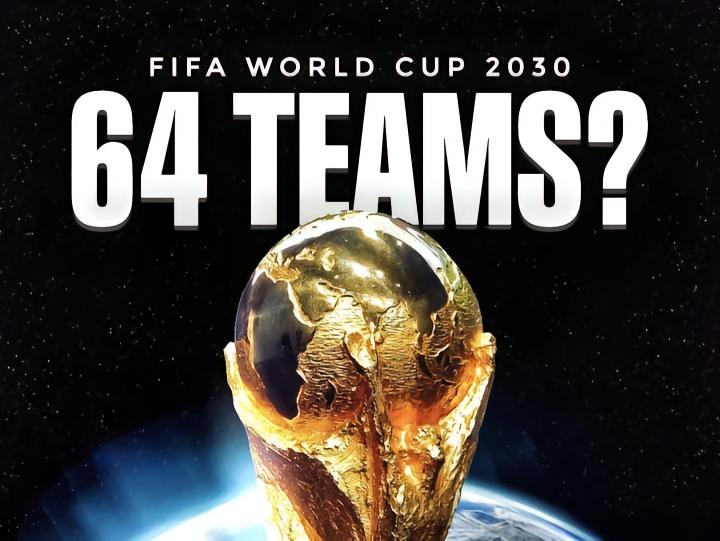
The idea of a 64-team World Cup didn't come out of nowhere. CONMEBOL (South American Football Confederation) had previously proposed it, citing the need to "celebrate the 2030 centenary World Cup and allow more countries to participate in this special tournament." This reason is well-suited for FIFA to use; like FFE (South American Football Confederation), it can be packaged as "democratization" and "development of football." The difference is that expansion is a path FIFA is more familiar with and can more easily implement. It doesn't require handing over the future of the World Cup to external capital; it simply increases the number of matches, the number of slots, and the revenue.
Infantino has just hit a wall with FFE and needs a new path for commercial expansion, while simultaneously avoiding appearing to continue challenging the bottom line of football governance. Expanding the World Cup provides a convenient fallback. It will bring problems and require lengthy negotiations, but these controversies are far less significant than "selling World Cup shares to private investors."
From this perspective, the 64-team World Cup seems like an emergency measure after the failure of FFE, or it may simply be the old path Infantino wanted to take. For the past decade, his forte has been expanding FIFA's tournaments. The 48-team World Cup, the expanded Club World Cup, and the ever-growing global tournament landscape all essentially follow the same logic: to enlarge FIFA's empire and then use the increased revenue to solidify his political base. FFE may never have been Infantino's primary goal; now, retreating to expansion may be his true intention.
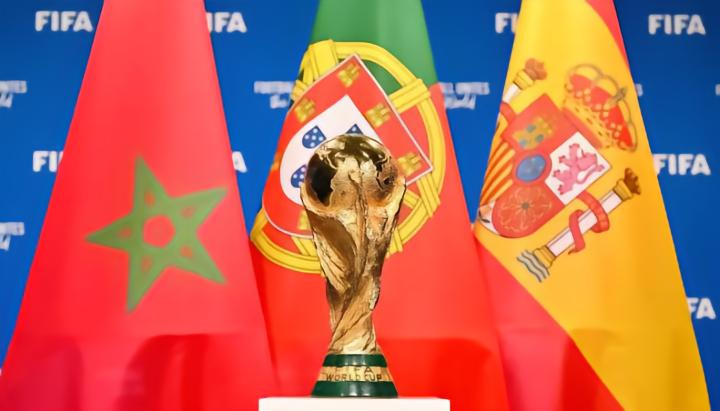
The problem is that this controversy has changed how many people view Infantino. The FFE has torn away a corner of Infantino's elegant facade. It has shown the outside world that the so-called democratization of football is sometimes only a step away from commercialization; that helping smaller nations' associations can sometimes be a reason for gaining political support for large deals. More importantly, it has led to a large number of insiders forming a unified backlash against Infantino in a very short period of time.
The FFE has withdrawn its support, but the matter is far from over. UEFA has stated that it has "lost confidence in the current FIFA leadership," and more and more UEFA members are stepping forward to withdraw their support for Infantino, hoping for his resignation. Faced with this predicament, Infantino urgently convened a meeting of FIFA's core executives in Morocco on August 5th. Foreign media generally interpret this meeting as Infantino's last-ditch effort to retain power.
The most ironic part is that in the past few years, FIFA, together with UEFA, opposed the European Super League, arguing that football should not be privatized by capital and that tournament resources should not be transformed into commercial products. Now, FIFA has launched FFE itself, essentially rubbing salt into UEFA's still-healing wounds.
He once stood on moral high ground to criticize the European Super League; now it's Infantino's turn to face the same criticism.